5 Signs It's Time to Rent a Hospital Bed for Home Care
Unsure if your loved one needs a hospital bed at home? Here are five clear signs it's time to rent one, from mobility issues to post-surgery recovery.
Sarah Nguyen
Patient Care Coordinator

As a patient care coordinator, I hear the same hesitation in almost every phone call. Families want to ensure their loved one is safe, but they worry that bringing in medical equipment signals a decline they aren’t ready to accept. From my experience, that hesitation is often the tipping point between a manageable home routine and a preventable emergency.
The decision to rent a hospital bed rarely comes down to a single dramatic event; instead, it is usually a series of small, daily struggles that add up to a dangerous situation.
Here are five data-backed signs that it is time to seriously consider renting a hospital bed for home care.
Sign 1: Getting In and Out of Bed Has Become Dangerous
This is the most frequent reason families reach out to us. According to the CDC, one in four Americans aged 65 and older falls each year, and 55% of those fall injuries occur inside the home. If your loved one struggles to swing their legs over the side of the mattress or requires you to pull them up, your current setup is actively increasing that risk.
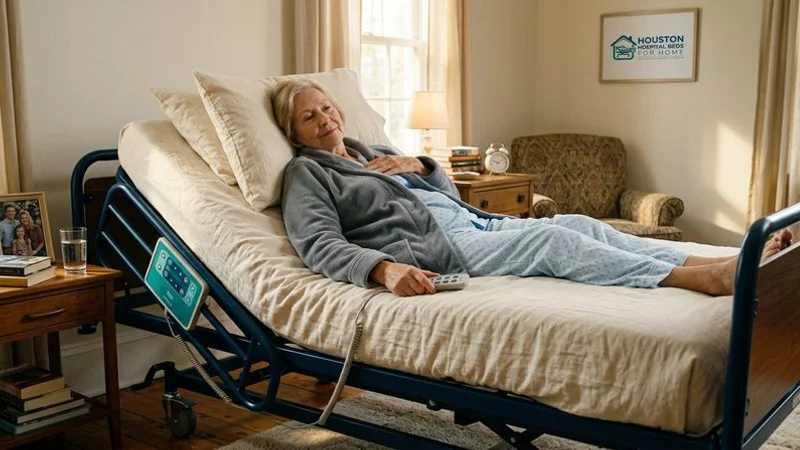
A standard bed is a fixed height, which forces the patient to work against gravity. A hospital bed solves this with a “Hi-Lo” mechanism that adjusts the deck height—often from as low as 7 inches to as high as 30 inches—to match the patient’s specific leg length.
Why the Right Equipment Matters
We often see families try to fix this with step stools or bed risers, but those unstable “hacks” can be hazardous. Here is how the proper equipment compares:
| Feature | Regular Home Mattress | Electric Hospital Bed |
|---|---|---|
| Sit-to-Stand Support | Fixed height (often too high or low) | Adjusts to patient’s exact knee height |
| Core Support | Requires patient to engage abs to sit up | Electric head section does the lifting |
| Transfer Safety | No handholds; patient grabs furniture | Secure side rails for gripping |
| Fall Prevention | Static height | Lowers to floor level for sleeping safety |
If you are currently stacking pillows to prop them up or noticing they grab the nightstand for balance, you are seeing a clear signal that the bedroom environment needs to change.
Sign 2: The Caregiver Is Experiencing Back Pain
Caregiver safety is just as critical as patient safety, yet it is frequently overlooked until an injury occurs. If you or a professional aide are feeling strain in your lower back or shoulders, you are likely exceeding safe lifting limits.
The National Institute for Occupational Safety and Health (NIOSH) sets the maximum recommended weight limit for manual lifting at just 35 pounds. Even if your loved one is petite, lifting their torso to change sheets or help them sit up significantly exceeds this safety threshold.
With a full-electric hospital bed, you protect your own health by:
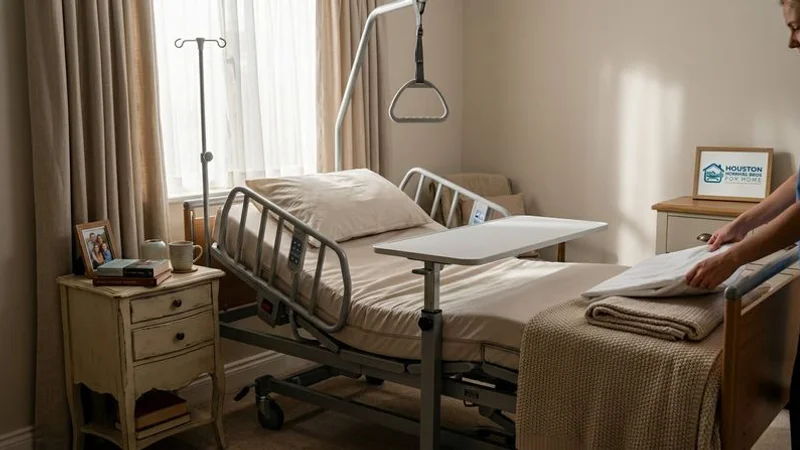
- Raising the bed to waist level so you never have to bend over during wound care or changes.
- Using the electric controls to reposition the patient, eliminating the need for manual pulling.
- Reducing “Shear” Force: This is the friction caused when dragging a patient across a flat sheet. An adjustable bed contours to move with the body, reducing this physical strain.
We have seen many dedicated spouses burn out simply because the physical toll became unsustainable. Protecting your back ensures you can continue to provide care long-term.
Sign 3: Recent Hospital Discharge or Surgery Recovery
Post-hospitalization recovery is a race against readmission. Data from Definitive Healthcare indicates that the average 30-day hospital readmission rate in the U.S. is around 15.3%. One of the most effective ways to lower this risk is by replicating the hospital’s recovery environment at home.
Certain medical conditions require specific positioning that a flat mattress cannot provide:
- Heart Failure & Respiratory Issues: These patients often require Fowler’s Position (sitting at 45-60 degrees) to reduce cardiac workload and improve lung expansion.
- Hip Replacements: Doctors often mandate that the hip acts as a pivot point, requiring a specific seat height that standard beds cannot offer.
- Stroke Recovery: Side rails become essential for independent movement and preventing nighttime falls.
If a discharge planner suggests a hospital bed, they are not trying to upsell you; they are trying to prevent a return trip to the ER. For most short-term recovery needs, a semi-electric hospital bed is the standard solution. Our delivery team can often install it before the ambulance even arrives at your driveway.
Sign 4: You Notice Redness or Skin Breakdown
Pressure injuries, commonly known as bedsores, are a medical emergency in disguise. According to the National Pressure Injury Advisory Panel (NPIAP), a pressure ulcer can form in as little as two hours of immobility.
Once a patient becomes bedbound or spends the majority of their day in bed, a standard coil or foam mattress fails to distribute pressure adequately. Watch for these early warning signs:
- The “Blanch Test” Failure: Press on a red area of skin. If it does not turn white (blanch) and then return to red, you may already be dealing with a Stage 1 pressure injury.
- Heel Pain: The heels are often the first spot to break down on a regular mattress.
Hospital beds are designed to work with specialized surfaces, such as alternating pressure mattresses, which automatically inflate and deflate different air cells to mimic natural movement. This technology does what a human caregiver cannot: it provides continuous pressure redistribution 24 hours a day.
Sign 5: The Financial and Emotional Cost Is Rising
Sometimes the sign isn’t medical, but practical. We speak to many families who are considering assisted living simply because the home setup has become unmanageable.
The 2024 Genworth Cost of Care Survey highlights a stark financial reality:
- Assisted Living: The national median cost has risen to approximately $70,800 per year.
- Nursing Homes: A private room now averages over $127,750 annually.
- Home Care: While costs are rising, renting equipment to enable aging in place remains a fraction of the cost of a facility.
If your loved one is sleeping in a recliner because they can’t lie flat, or if you are sleeping on the floor next to them to monitor their safety, the situation is not sustainable. These “workarounds” lead to Caregiver Burnout Syndrome—a state of physical, emotional, and mental exhaustion that compromises your ability to care for anyone.
What to Do Next
If you recognize any of these signs, taking action now is easier than waiting for a crisis. Here is the recommended path forward:
- Consult the Doctor: Ask specifically if a hospital bed is “medically necessary.” This is the keyword required for insurance documentation, often formalized in a “Certificate of Medical Necessity” (CMN).
- Call for a Consultation: We can help you determine the specific bed type based on the patient’s weight and mobility level.
- Check Delivery Times: If you call before 2pm, we can frequently delivered and set up the equipment in your Houston home the same day.
- Start with a Rental: You do not need to commit to a purchase immediately. See our rental vs buying guide to understand why renting is often the smarter initial choice.
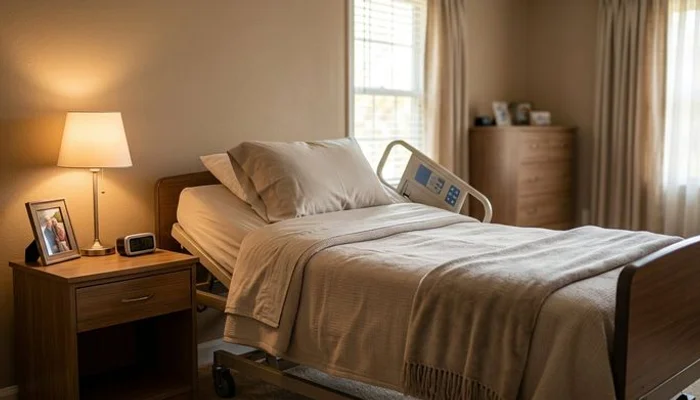
The right equipment acts as a partner in your caregiving journey, not an intruder.
We Are Here to Help
At Houston Hospital Beds For Home, we help families in the Greater Houston area navigate these decisions every day. Call us at (713) 555-0123 or request a free quote online — we will help you figure out the best path forward for your family.
Need a Hospital Bed in Houston?
Get a free, no-obligation quote with transparent pricing and same-day delivery options.