How to Use a Hospital Bed Hand Pendant: A Simple Guide for Caregivers
A step-by-step guide to operating the hand pendant on electric hospital beds. Learn head, foot, and height controls for safe, comfortable positioning.
Sarah Nguyen
Patient Care Coordinator
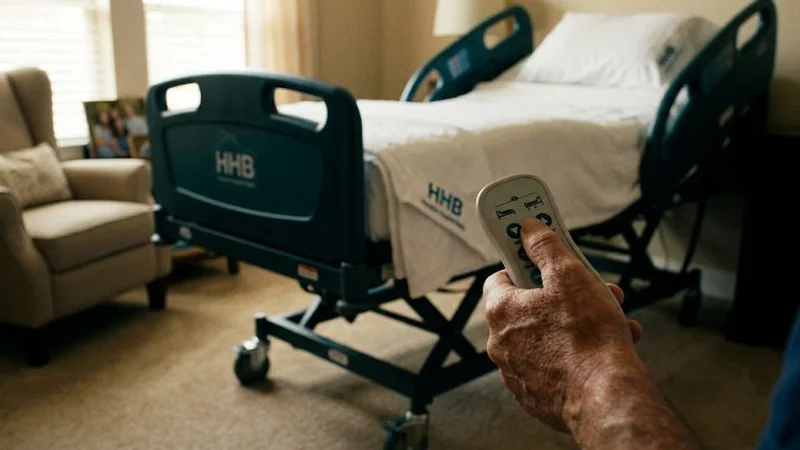
The hand pendant serves as the primary control center for electric hospital beds for home care. It acts as a direct link between the caregiver and the patient’s comfort. We see many families overlook this small device until they need to adjust a sleeping loved one in the middle of the night.
Understanding this controller is the quickest way to ensure safety and ease of use. Whether you are managing a semi-electric setup or a more advanced full-electric model, the buttons function similarly across most major manufacturers.
What Is a Hand Pendant?
The hand pendant is a wired remote control that connects directly to the bed’s motor system. It typically features a heavy-duty cord and a hard plastic shell designed to withstand daily drops and cleaning.
Most hospital bed remotes connect via a multi-pin plug inserted into the motor housing under the frame. This wired connection ensures reliability. Wireless signals can fail or suffer from interference. A hardwired connection guarantees the bed moves exactly when you need it to move.

Hand Pendant Buttons Explained
Semi-Electric Bed Pendant (4 buttons)
We find that the semi-electric pendant is the most common controller in home care settings. It focuses strictly on positioning the patient’s body.
| Button | Symbol | Function | Best Use Case |
|---|---|---|---|
| Head Up | ↑ (Top) | Raises the backrest | Eating, watching TV, or aiding breathing. |
| Head Down | ↓ (Top) | Lowers the backrest | Sleeping or preparing for a log-roll turn. |
| Foot Up | ↑ (Bottom) | Raises the knee break | preventing sliding or reducing heel pressure. |
| Foot Down | ↓ (Bottom) | Lowers the knee break | Flattening the bed for sleep or transfers. |
The overall height of a semi-electric bed does not change with this remote. You must use a manual hand crank located at the foot of the bed to raise or lower the entire frame.
Full-Electric Bed Pendant (6-8 buttons)
A full-electric bed pendant offers total control without manual labor. It includes the standard positioning buttons listed above and adds height adjustments.
| Button | Symbol | Function | Best Use Case |
|---|---|---|---|
| Bed Up | ↑ (Bed Icon) | Raises entire frame | Protecting the caregiver’s back during care tasks. |
| Bed Down | ↓ (Bed Icon) | Lowers entire frame | Fall prevention during sleep. |
| Auto-Contour | (Optional) | Links Head & Knee | Raises head and knees simultaneously to prevent sliding. |
Step-by-Step: Common Positioning Tasks
Sitting Up (Fowler’s Position)
- Press and hold the Head Up button.
- Stop when the backrest reaches approximately 45 to 60 degrees.
- Engage the Foot Up button for two seconds to create a slight knee bend.
Raising the knees is a crucial step that many people miss. A flat mattress combined with a raised head section causes gravity to pull the patient toward the footboard. A slight knee elevation acts as a passive brake to keep them comfortable and stationary.
Elevating Legs for Circulation
- Press and hold the Foot Up button.
- Raise the section until the patient’s heels are slightly above the level of their heart.
- Keep the head section flat or at a low angle.
We recommend checking the patient’s heels after positioning. The “knee break” feature lifts the knees but can sometimes increase pressure on the heels. You may need to place a pillow under the calves to “float” the heels off the mattress.
Preparing for a Safe Transfer
- Use the Bed Up button to raise the frame.
- Align the top of the mattress with the seat of the wheelchair or commode.
- Lower the side rail on the exit side only.
- Use Head Up to bring the patient to a sitting position.
Height alignment is the most significant factor in reducing caregiver back strain. This capability is one of the primary benefits of a full-electric bed for home caregivers.
Lowering the Bed for Safety
- Verify the patient is in the center of the mattress.
- Press and hold Bed Down until the motor stops completely.
- Check that the casters (wheels) are locked.
The FDA and patient safety organizations identify bed height as a critical factor in injury prevention. If a patient attempts to exit the bed unassisted, a low deck height reduces the impact force of a potential fall. You can find more strategies in our guide on fall prevention tips for elderly bedrooms.

Essential Safety Protocols
Secure the cord properly. The cord presents a strangulation risk if routed incorrectly. We instruct caregivers to route the cable through the side rail gaps rather than over the top. It should have enough slack to move with the bed but not enough to loop around a limb or neck.
Utilize the lockout feature. Many advanced pendants on the back or side have a “lockout” switch. This creates a physical lock that prevents the buttons from working. It is an essential feature for patients with dementia or confusion who might accidentally operate the bed when unsupervised.
Respect the duty cycle. Hospital bed motors are not designed for continuous play. Most manufacturers specify a “2 minutes on, 18 minutes off” duty cycle. Rapidly toggling buttons or running the motors constantly can trigger the thermal overload protection and shut the bed down temporarily.
Troubleshooting Your Pendant
The remote does nothing when pressed. Check the connection under the bed first. Vacuum cleaners and moving pets often pull the plug loose from the control box. Push the connector firmly back into its port until it clicks or sits flush.
The bed only works in one direction. This often indicates a “lockout” is partially engaged or a button is stuck. Inspect the face of the pendant for sticky residue (like spilled juice) that might be holding a button down. Clean around the button edges with a toothpick if necessary.
The green light is off (if equipped). Power loss is the likely culprit. Test the wall outlet with a lamp to ensure the breaker hasn’t tripped. If the outlet works but the bed doesn’t, the internal fuse in the bed’s control box may need replacement.
The pendant got wet. Moisture destroys these circuits instantly. If the remote falls into a basin or gets spilled on, unplug it from the bed frame immediately. Do not plug it back in until it has dried for at least 48 hours.
We Train You During Delivery
Our team believes that equipment is only as good as the person using it.
When we deliver a hospital bed, we provide a complete hands-on demonstration. We watch you operate the pendant to ensure you understand the tactile feel of the buttons and the speed of the motor. You will not be left guessing.
For existing customers who need a quick refresher, call us at (713) 555-0123. We can walk you through the controls over the phone or arrange a service check.
Do you need to upgrade your current setup? Request a free quote today and let us match you with the right technology for your home.
Need a Hospital Bed in Houston?
Get a free, no-obligation quote with transparent pricing and same-day delivery options.