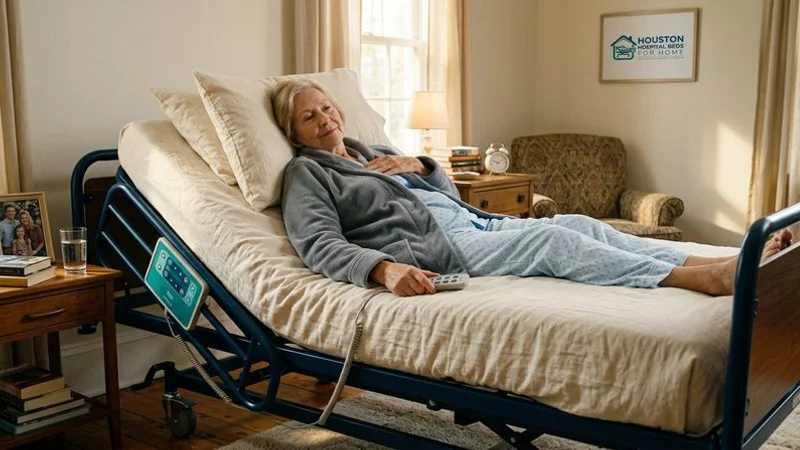
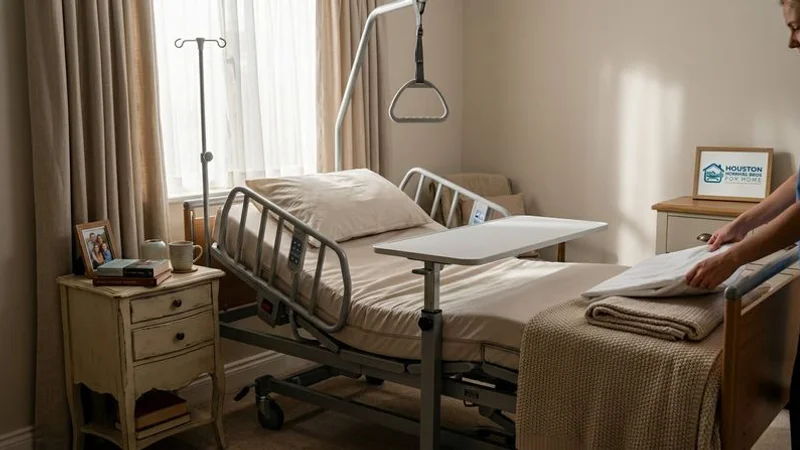
Best Hospital Bed Features for Elderly Patients at Home
Choosing a hospital bed for an elderly family member? Learn which features matter most — from fall prevention to quiet motors and easy controls.
Marcus Thompson
Founder & Medical Equipment Specialist
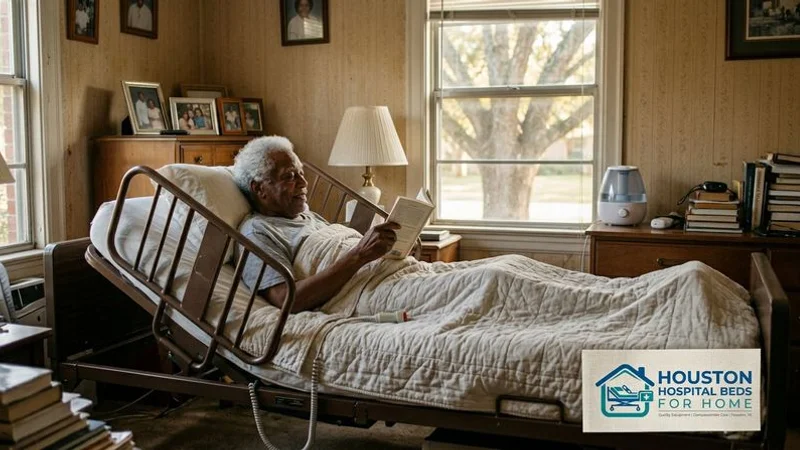
Selecting a hospital bed for a family member is fundamentally different from outfitting a clinical ward.
Most people focus on the medical specs, but the home environment demands a different approach.
Comfort often dictates compliance.
If the bed feels like a cold piece of medical machinery, your loved one might resist using it.
We have spent years helping families strike the balance between clinical safety and residential comfort.
Our team has identified the specific features that actually reduce caregiver strain and improve patient safety in a home setting.
Here is a breakdown of the features that matter most when selecting a home hospital bed for an elderly loved one.
1. Electric Height Adjustment (High-Low Capability)
This function is non-negotiable for in-home care.
Static beds or semi-electric models often force caregivers to bend awkwardly, leading to back injuries.
We find that a travel range of at least 10 to 12 inches is necessary for safety.
The ability to adjust the deck height serves three critical functions:
- Safe transfers: The bed lowers until the patient’s feet are flat on the floor for stability before standing.
- Ergonomic caregiving: The deck raises to the caregiver’s waist level (approx. 30-36 inches) for changing linens or dressing wounds.
- Wheelchair alignment: You can match the mattress height exactly to the seat of a wheelchair or commode.
Many families try to save money with manual adjustments, but the physical toll is rarely worth the savings.
This level of functionality is standard on full-electric hospital beds.
Full-electric models allow the patient or caregiver to adjust the height with the push of a button.
For a deeper look at the differences, you can review our comparison of semi-electric vs full-electric beds.
2. Low-Height Capability (Deck-to-Floor)
Falls remain the leading cause of injury-related death among adults age 65 and older in the US.
Standard hospital beds often sit too high, even at their lowest setting.
We strongly advise looking for a “low bed” frame that drops to 7 or 9 inches from the floor.
A lower center of gravity significantly reduces the impact force if a patient rolls out of bed.
This feature is particularly vital for specific conditions:
- Alzheimer’s or Dementia: Patients may attempt to exit bed without assistance due to confusion.
- Parkinson’s Disease: Lower heights help manage the center of gravity during transfers.
- Active Sleepers: Those prone to tossing and turning have a shorter distance to fall.
Strategies for bedroom safety go beyond the bed frame itself.
Our team details other modifications in our fall prevention guide for elderly bedrooms.
3. Quiet DC Motors
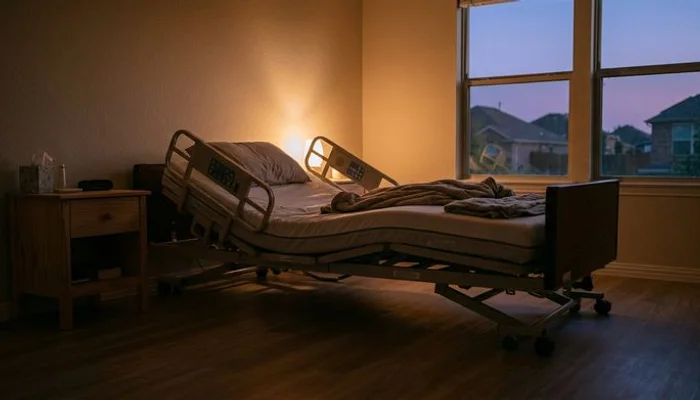
Noise levels in a small bedroom are more noticeable than in a busy hospital ward.
Older AC motors tend to hum loudly and vibrate the frame, which can startle a sleeping patient.
We prioritize beds equipped with 24V DC motors, such as those made by Linak or DewertOkin.
These motors offer a “whisper-quiet” operation that is essential for maintaining a calm environment.
The benefits of DC motors extend beyond volume:
| Feature | AC Motor (Older Tech) | DC Motor (Modern Standard) |
|---|---|---|
| Noise Level | Loud hum, mechanical clicking | Near silent operation |
| Movement | Often jerky or sudden | Smooth, gradual start/stop |
| Maintenance | Higher failure rate over time | Sealed units, long lifespan |
| Battery Backup | Rarely included | Standard 9V emergency lowering |
Every full-electric bed we stock at Houston Hospital Beds For Home utilizes these quieter DC systems.
4. Simple Hand Pendant Controls
Technology is only useful if the patient can actually operate it.
Complex remotes with LCD screens or twenty small buttons often lead to frustration for elderly users.
We look for pendants that prioritize tactile navigation.
The best controllers for seniors share these specific traits:
- High-Contrast Buttons: Large icons that are easy to see without reading glasses.
- Recessed Buttons: Designs that prevent accidental activation if the remote is rolled on.
- Glow-in-the-Dark Labels: Essential for finding the remote during the night without turning on lamps.
- Heavy-Duty Cords: Thicker cabling that withstands being pulled or caught in rails.
Caregivers also need control over the bed’s positioning.
A “lockout” feature on the back of the pendant or at the footboard allows you to disable specific functions to prevent unsafe adjustments.
You can learn more about operating these devices in our hand pendant guide.
5. Half-Length Side Rails
Restraint-free care is the modern standard for safety.
Full-length rails were once common, but they are now recognized as a potential entrapment hazard.
We recommend half-length (or “assist”) rails for the majority of home care scenarios.
These shorter rails cover the head section of the bed and serve a different purpose than full rails.
Why Half-Length Rails are Superior for Home Use:
- Assisted Repositioning: They provide a sturdy handle for the patient to grip when turning over.
- Safe Egress: The bottom half of the bed remains open, allowing the patient to swing their legs out freely.
- Reduced Anxiety: Patients feel less “caged in” compared to full-length barriers.
The FDA Entrapment Zones:
Safety guidelines identify seven potential “zones” where patients can get caught in bed rails.
Full rails increase the risk in Zone 1 (within the rail) and Zone 2 (under the rail).
Proper installation is critical to minimizing these risks.
Our team covers proper rail spacing during our in-home setup and training.
6. A Therapeutic Support Surface
The mattress is the primary defense against pressure ulcers (bedsores).
Standard inner-spring mattresses create pressure points on hips, shoulders, and heels.
We advise against using a standard twin mattress on a hospital frame.
Hospital bed frames articulate (bend), and rigid consumer mattresses will bunch up or slide off.
Mattress Tier Comparison:
| Mattress Type | Best Used For | Key Feature |
|---|---|---|
| High-Density Foam | Prevention & Comfort | Multi-layered foam redistributes weight |
| Gel-Infused Foam | Heat Regulation | Gel draws heat away from the body |
| Low Air Loss | Treatment (Stage I-II) | Air circulation keeps skin dry |
| Alternating Pressure | Treatment (Stage III-IV) | Bladders inflate/deflate to move pressure |
Understanding the patient’s mobility level dictates the choice.
Immobile patients require higher-grade surfaces like alternating pressure systems.
You can explore the technical differences in our guide to choosing the right hospital bed mattress.
We also provide a full catalog of mattresses and accessories tailored for home care.
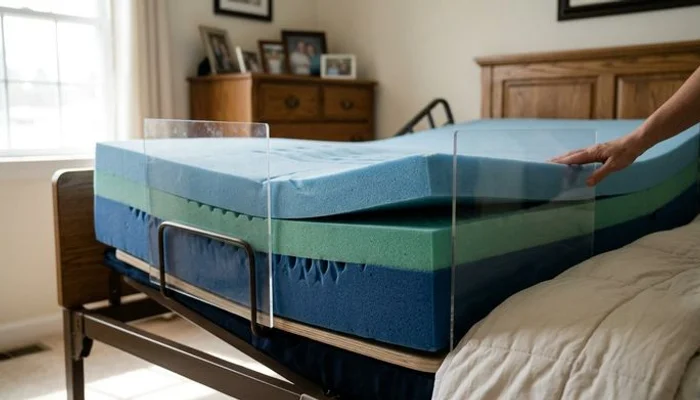
7. Central Locking Systems
Stability is paramount when a patient acts to stand up.
Standard caster locks on individual wheels can be difficult for elderly caregivers to engage.
We prefer beds equipped with a “Central Locking System” or a “Roll-at-Any-Height” lock.
This mechanism allows you to lock all four wheels by stepping on a single pedal at the foot of the bed.
Why Caster Quality Matters:
- Carpet Navigation: 3-inch casters often drag on plush home carpet; 5-inch casters roll smoothly.
- Transfer Stability: Cheap plastic locks can slip on hardwood floors during a transfer.
- Brake Access: Individual locks on the head-end wheels are often unreachable against a wall.
Our technicians verify the brake holding power on every surface type during delivery.
8. Bed Exit Alarms (Proactive Safety)
Caregivers cannot watch a patient 24 hours a day.
An integrated scale or pressure-pad alarm acts as a second set of eyes.
We recommend systems that offer adjustable delay settings.
A “zero-delay” setting alerts you the moment weight is lifted, while a 1-2 second delay prevents false alarms if the patient simply shifts weight.
This technology allows the caregiver to sleep in another room with peace of mind.
These systems are available as integrated features or add-ons with our hospital bed rentals and purchases.
9. Sanitation-Ready Surfaces
Home care often involves fluids, food spills, and wound drainage.
Wooden household beds absorb moisture and harbor bacteria.
We select beds with powder-coated steel frames and impact-resistant ABS plastic panels.
These materials withstand medical-grade disinfectants without degrading or rusting.
Cleaning Best Practices:
- Deck Grids: Look for slat decks or grid decks that allow airflow and are easy to wipe down.
- Sealed Seams: Mattresses should have RF-welded seams (heat-sealed) rather than stitched seams to prevent fluid ingress.
- Removable Heads: Headboards that pop off easily make it simpler to clean behind the bed.
10. Residential Aesthetics
The psychological impact of the room’s appearance affects recovery.
A clinical “ICU look” can be demoralizing for someone living in their own bedroom.
We source beds that incorporate wood-grain laminates and concealed mechanics.
Manufacturers now offer “Premier” or “Executive” models that hide the casters and motors behind wood trim.
Blending Safety with Style:
- Headboard Options: Choose finishes (Cherry, Mahogany, Oak) that match existing bedroom furniture.
- Linens: Use fitted sheets specifically sized for 36” x 80” hospital mattresses to avoid the “hospital white” look.
- Lighting: Warm bedside lamps reduce the institutional feel compared to overhead glare.
11. Emergency Battery Backup
Power outages are a reality that must be planned for.
If the power fails while the bed is in a raised position, the patient could be stranded.
We ensure that the control box on every bed includes a 9-volt battery backup slot.
This simple feature allows the bed to be lowered to a flat, safe transfer height even without electricity.
Higher-end models may offer a rechargeable battery pack that allows full operation for 24-48 hours during an outage.
We Help You Choose the Right Features
Technical specifications can be overwhelming when you are just trying to keep a parent safe.
Our approach is to simplify the selection process based on your specific home environment.
We ask the right questions about door widths, caregiver strength, and patient condition to prevent costly mistakes.
You can contact us for a free consultation or call (713) 555-0123 to discuss your needs.
Our team delivers and sets up across the Greater Houston area, ensuring your home is ready for care immediately.
Need a Hospital Bed in Houston?
Get a free, no-obligation quote with transparent pricing and same-day delivery options.