7 Benefits of a Full-Electric Hospital Bed for Home Care
Discover why full-electric hospital beds are the top choice for long-term home care. From caregiver ease to patient comfort, here are 7 key benefits.
Sarah Nguyen
Patient Care Coordinator

When families ask me which type of hospital bed I recommend for home care, my answer almost always starts with the full-electric model.
We know that it is not the cheapest option.
Most people focus on the patient’s immediate comfort, but they often overlook the long-term toll that manual adjustments take on the caregiver.
For patients who will use a hospital bed for home care for more than a few months, the benefits are substantial for both the patient and the caregiver.
Here are seven specific reasons why a full-electric hospital bed is worth the investment.
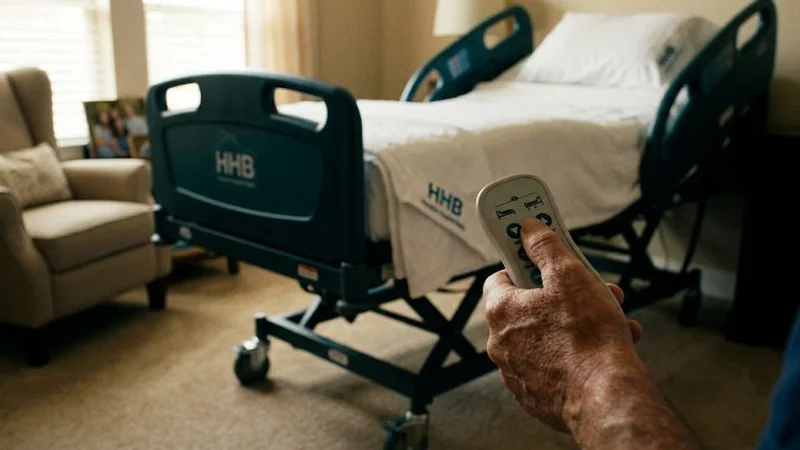
1. Every Adjustment Is at the Push of a Button
With a full-electric bed, the patient or caregiver controls three movements electronically:
- Head section: raises and lowers the upper body
- Foot section: raises and lowers the legs
- Overall bed height: raises and lowers the entire frame
This is the key difference from a semi-electric bed, which requires a hand crank for height adjustment.
That hand crank sounds like a minor detail until you need to change the bed height multiple times per day.
We have found that manually raising a bed can require 20 to 30 turns of the crank just to move it one inch.
With full-electric controls, every adjustment takes seconds and zero physical effort.
Top-tier models often use high-quality motors, such as those from Linak, which operate quietly and reliably.
2. Caregiver Back and Joint Protection
Back injuries are the most common health problem among home caregivers.
The National Institute for Occupational Safety and Health (NIOSH) recommends a maximum weight limit of just 35 pounds for manual patient lifting.
Bending over a low bed to change sheets, dress a patient, or perform wound care often exceeds this safe limit.
A full-electric bed eliminates this problem by allowing you to create a “zero-lift” environment.
The caregiver raises the bed to a comfortable working height, typically waist level, and performs care tasks without bending.
When the task is done, they lower the bed back to transfer height or sleep height.
I have worked with caregivers who went from daily back pain to pain-free routines simply by switching from a regular bed to a full-electric hospital bed.
3. Safer Bed-to-Wheelchair Transfers
Transfers between the bed and a wheelchair are one of the highest-risk moments in daily care.
The number one factor that makes transfers safer is matching the bed height to the wheelchair seat height.
To do this correctly, you should measure the patient’s “popliteal height,” which is the distance from the crease behind their knee to the bottom of their heel.
With a full-electric bed, you can adjust the bed height to exactly match this measurement or the wheelchair seat.
This eliminates the dangerous step-down or step-up that causes slips and falls during transfers.
For patients who use a wheelchair regularly, this benefit alone justifies the cost difference between semi-electric and full-electric models.
4. Fall Prevention with Low-Height Mode
Many full-electric beds can lower to within 7 to 9 inches of the floor.
This “low bed” position is a proven fall prevention strategy for patients who are at risk of rolling out of bed during sleep.
The FDA identifies seven specific “Entrapment Zones” around hospital beds, and keeping the bed low reduces the risk of injury if a patient exits the bed unsafely.
If a patient does roll out of a bed that is 9 inches from the floor, the injury risk is dramatically lower than falling from a bed that is 24 inches high.
This is especially important for patients with dementia, seizure disorders, or those who are restless at night.
For more strategies on keeping elderly patients safe in the bedroom, see our guide to fall prevention tips.
5. Respiratory Comfort Through Positioning
Many conditions benefit from specific angles of elevation during sleep and rest.
Medical professionals use standard positions like “Semi-Fowler’s” (30-45 degrees) and “High Fowler’s” (60-90 degrees) to treat specific symptoms.
| Condition | Recommended Angle | Benefit |
|---|---|---|
| COPD / Emphysema | High Fowler’s (60-90°) | Maximizes lung expansion to reduce breathing effort. |
| GERD (Acid Reflux) | Low Fowler’s (15-30°) | Uses gravity to keep stomach acid from rising. |
| Heart Failure | Semi-Fowler’s (30-45°) | Reduces fluid accumulation around the heart/lungs. |
| Post-Surgery | Varies (often 30-45°) | Reduces tension on abdominal sutures. |
With a full-electric bed, the patient can find their ideal angle with the pendant and adjust it throughout the day and night as comfort needs change.
No calling for help, no wrestling with pillows, just press a button.

6. Patient Independence and Dignity
One of the most overlooked benefits of a full-electric bed is what it does for the patient’s sense of independence.
Psychologists often refer to “learned helplessness” in care settings, where patients stop trying to do things for themselves because they rely too heavily on others.
When someone can adjust their own bed position to sit up to eat or elevate their legs for comfort, they maintain a degree of control over their daily life.
This matters more than most people realize.
A bed that responds to the patient’s needs without requiring help from someone else preserves dignity and promotes mental well-being.
The hand pendant is simple to use, with clearly labeled buttons that even patients with limited hand strength can operate.
7. Better Sleep for Everyone
A full-electric hospital bed improves sleep quality for the patient through precise positioning.
But it also improves sleep for the caregiver.
When the patient can adjust their own bed position at 2am without calling for help, the caregiver stays asleep.
We have compiled a comparison to help you weigh the options.
| Feature | Semi-Electric Bed | Full-Electric Bed |
|---|---|---|
| Head/Foot Adjustment | Electric (Remote) | Electric (Remote) |
| Height Adjustment | Manual (Hand Crank) | Electric (Remote) |
| Caregiver Effort | High (Physical Cranking) | Zero (Push Button) |
| Typical Price Range | $600 - $1,000 | $800 - $5,000+ |
| Ideal Duration | Short-term (under 3 months) | Long-term (3+ months) |
Better sleep leads to better health, faster healing, and improved mood for everyone in the household.
Is a Full-Electric Bed Right for Your Situation?
A full-electric hospital bed is the right choice if:
- The bed will be used for more than 3 months
- The patient needs frequent height adjustments for transfers, meals, or sleep
- The caregiver has back problems or physical limitations
- Fall prevention is a priority
- The patient values independence and wants to self-adjust
It is important to note that Medicare Part B typically covers the cost of a manual or semi-electric bed if medically necessary.
Most patients viewing the full-electric height adjustment as a significant upgrade choose to pay the difference out of pocket for the added functionality.
If the need is short-term, such as 1-3 months of post-surgery recovery, and the patient is relatively mobile, a semi-electric bed may be sufficient.
For everything else, the full-electric model is worth the modest price difference.
Get a Full-Electric Bed Delivered Today
We stock full-electric hospital beds in our Houston warehouse and can deliver with white-glove setup the same day you call.
Our team will assemble the bed, test every function, and train you on the controls before we leave.
Get a free quote or call (713) 555-0123 to discuss your situation with our team.
Need a Hospital Bed in Houston?
Get a free, no-obligation quote with transparent pricing and same-day delivery options.