Bariatric Hospital Beds: Everything You Need to Know Before Renting
A complete guide to bariatric hospital beds — weight capacities, mattress options, sizing, and what to look for when renting for home care.
Marcus Thompson
Founder & Medical Equipment Specialist
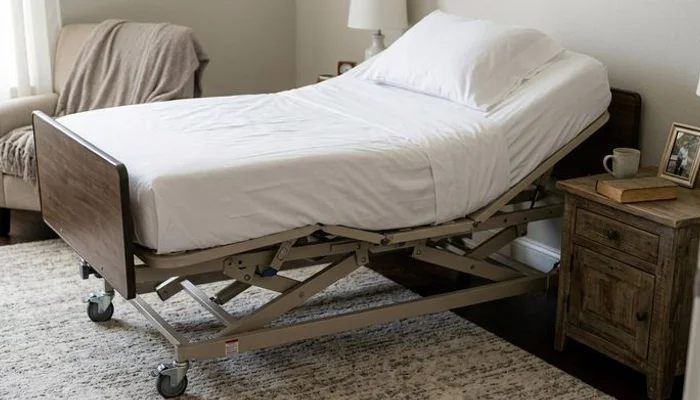
We understand that caring for a loved one with limited mobility is already a significant challenge. The situation becomes even more complex when standard medical equipment fails to provide adequate safety or comfort. Our team sees this scenario frequently with families in Houston who realize a standard home hospital bed simply isn’t wide or strong enough.
You need equipment that offers stability rather than uncertainty.
Standard beds have strict weight and width limits that can compromise patient care if exceeded. We find that moving to a bariatric hospital bed is often the single most important step in preventing falls and ensuring a good night’s sleep.
Let’s look at the specific engineering differences, the safety data you need to know, and how to prepare your home for delivery.
What Makes a Bed “Bariatric”?
A bariatric hospital bed is explicitly engineered for patients who exceed the weight capacity or width requirements of a standard model. Standard beds typically support a Safe Working Load (SWL) of 350 to 450 pounds. Bariatric units increase this capacity significantly to a range of 600 to 1,000+ pounds depending on the specific model.
We need to clarify a critical definition that many people miss.
Safe Working Load (SWL) vs. Patient Weight
The weight capacity listed on a bed is usually the Safe Working Load, not just the patient limit. This number includes the patient, the mattress (which can weigh 30-50 lbs), the bedding, and any accessories. We always recommend calculating the patient’s weight plus 20% to ensure the motors are not strained.
Bariatric beds differ in several other key areas:
- Width: They range from 42 to 54 inches wide, compared to the standard 36 inches.
- Frame construction: Manufacturers use reinforced steel with heavy-gauge tubing and welded joints.
- Motor strength: High-torque motors are used to lift heavier loads without stalling.
- Mattress platform: The deck is reinforced with steel slats or a solid pan to prevent sagging.
- Side rails: These are longer and constructed from heavier steel to withstand greater force.
Weight Capacity Options
We categorize beds based on their SWL to help you match the equipment to the patient’s specific needs. This table outlines the general industry standards we follow.
| Bed Category | Safe Working Load | Mattress Width | Ideal For |
|---|---|---|---|
| Standard | 350-450 lbs | 36 inches | Most general recovery patients |
| Heavy-Duty | 450-600 lbs | 42 inches | Patients 350-500 lbs |
| Bariatric | 600-750 lbs | 48 inches | Patients 500-650 lbs |
| Super Bariatric | 750-1,000+ lbs | 54 inches | Patients 650+ lbs |
Important: Always choose a bed rated for at least 150 pounds more than the patient’s current weight. We emphasize this buffer because dynamic force—like a patient dropping heavily onto the bed—exerts more pressure than static weight.

Key Features to Look For
Reinforced Frame Architecture
The frame must be built with heavy-gauge steel tubing. We advise looking for welded joints rather than bolt-together construction. Welded frames maintain their structural integrity better under the constant stress of transfers and repositioning.
High-Torque Motors
Bariatric beds require stronger motors to raise and lower heavier patients smoothly. Our team looks for Linak or Okin motor systems, which are industry leaders for durability. These commercial-grade DC motors are rated for continuous duty and often feature a battery backup system, which is essential during Houston power outages.
Wider Mattress Platform
A wider sleeping surface improves safety significantly. We know that a patient positioned too close to the edge of a narrow bed is at a much higher risk of entrapment or falling. The extra width of a bariatric platform provides the necessary real estate for a patient to turn over without fear.
Heavy-Duty Locking Casters
Standard bed casters often fail under high weight loads. Bariatric beds utilize larger, reinforced casters (often 5 inches or larger) with steel braking mechanisms. Our technicians verify that these locks engage fully on both carpet and hard floors during delivery and setup.
Full-Electric Controls
We strongly recommend full-electric controls for all bariatric setups. Manual cranking is not a viable option when lifting a patient over 350 pounds. The electric hand pendant allows the patient or caregiver to effortlessly adjust the head, foot, and overall bed height with the push of a button.
Choosing the Right Bariatric Mattress
The mattress is the component that directly impacts skin health. A standard hospital mattress will compress completely (bottom out) under heavier weight, which creates dangerous pressure points.
We recommend three specific types of surfaces for bariatric care:
High-Density Bariatric Foam
This option uses foam with a density rating higher than 2.5 lbs per cubic foot. It provides a stable surface for patients who can reposition themselves independently. The increased density prevents the patient from sinking through to the metal deck.
Bariatric Alternating Pressure Mattress
This system uses a heavy-duty air pump to continuously inflate and deflate air cells. We consider this essential for immobile patients to prevent pressure ulcers (bed sores). The pump must be specifically rated for bariatric air flow to support the weight effectively.
Bariatric Gel-Foam Hybrid
This combines the stability of high-density foam with gel-infused layers. It helps regulate body temperature, which is a common complaint for larger patients. This offers a good balance between clinical pressure redistribution and general comfort.
Read our detailed guide on choosing a bariatric mattress for home care for specific brand recommendations and density specs.
Room Preparation for a Bariatric Bed
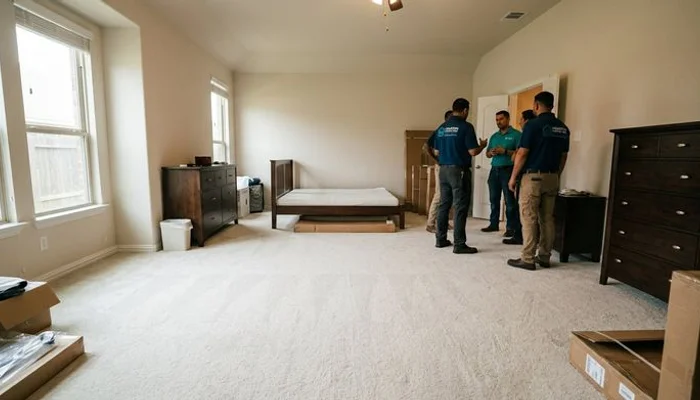
Bariatric beds are significantly larger and heavier than standard models. We require families to check a few specific measurements before we schedule a drop-off.
- Floor space: A 48-inch wide bed requires a room clearance of at least 11 feet wide to allow the bed width plus 3 feet of caregiver access on both sides.
- Door width: Standard interior doors are 30-32 inches wide. While we can disassemble beds, the head and footboards are often one solid piece. You may need to remove door stops or hinges to gain an extra inch of clearance.
- Floor strength: A fully loaded bariatric setup can weigh over 800 pounds concentrated in a small area. Concrete slabs and reinforced subfloors are ideal. We can advise you on using caster cups to distribute the weight on older pier-and-beam foundations during our pre-delivery call.
- Electrical access: The bed requires a grounded 110V outlet. We advise against using extension cords, as they can cause voltage drops that damage the bed’s motor control box.
For a complete checklist, see our guide on preparing your home for a hospital bed.
Bariatric Bed Rental vs Purchase in Houston
We often help families decide between renting and buying based on the expected length of recovery.
| Feature | Rental | Purchase |
|---|---|---|
| Monthly Cost | $300 - $500/mo | N/A |
| Upfront Price | N/A | $2,500 - $5,000+ |
| Delivery & Setup | Included | Included |
| Maintenance | Included | Your responsibility |
| Mattress | Included (Bariatric Rated) | Included (Bariatric Rated) |
| Pickup | Free | Your responsibility |
Renting is generally the practical choice for most short-term needs.
We see the “financial breakeven point” typically occurring around month five or six. Renting makes sense because:
- The upfront capital required to buy a quality bariatric bed is high.
- Maintenance on heavy-duty actuators requires specialized tools and parts.
- Patient needs change rapidly, often requiring different features within a few months.
- Disposing of a 300-pound steel bed frame is difficult and costly.
Read our rental vs buying guide for a detailed cost comparison framework.
Dignity and Comfort Matter
I want to address something important regarding patient care. Everyone deserves equipment that fits them properly and supports their dignity. We view a bariatric bed not as a “special” requirement but simply as the correct tool for the job.
The proper equipment changes the daily dynamic of care.
It means the patient can sleep without the fear of falling. Transfers become safer tasks rather than dangerous physical struggles. The equipment functions quietly and reliably without straining. Most importantly, the patient retains the same independence and positioning options as anyone else.
At Houston Hospital Beds For Home, we handle every consultation with privacy and professionalism. Our goal is to match specifications to needs, ensuring safety above all else.
Get a Bariatric Bed in Houston
We maintain a stock of bariatric hospital beds in our local warehouse to respond quickly to urgent needs. Our team can typically coordinate same-day white-glove setup for orders placed before noon.
We specialize in this equipment, so we ensure every bolt is tightened and every motor is tested before we leave your home.
Request a free quote or call (713) 555-0123. We are ready to help you identify the right weight capacity, the correct mattress type, and the best features for your loved one’s comfort.
Need a Hospital Bed in Houston?
Get a free, no-obligation quote with transparent pricing and same-day delivery options.