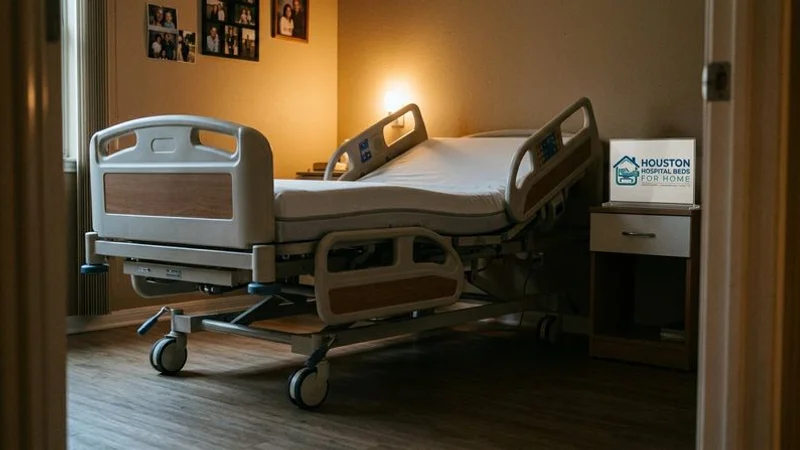
Aging in Place: How Adjustable Beds Help Seniors Stay Home Safely
Learn how adjustable beds support safe aging in place. From fall prevention to independence, discover why seniors and families choose adjustable beds at home.
Sarah Nguyen
Patient Care Coordinator

Most families wait until a crisis to address their parents’ bedroom safety.
We see this pattern constantly.
A sudden fall or a hospital discharge forces a frantic scramble to update the home environment.
But aging in place requires proactive support systems rather than reactive fixes.
Research from the AARP indicates that nearly 77% of adults over 50 want to remain in their homes long-term.
Achieving this goal demands specific modifications.
One of the most impactful changes a family can make is replacing a standard flat mattress with an adjustable bed designed for seniors.
Let’s look at the specific safety data, the financial case for early adoption, and the key features that make the biggest difference.
What Does “Aging in Place” Actually Entail?
Aging in place is the ability to live in one’s own home and community safely, independently, and comfortably.
It is not just about avoiding a nursing home.
Successful aging in place requires adapting the physical environment to match an individual’s evolving capacity.
The bedroom serves as the command center for this transition.
Seniors spend more time in the bedroom than any other room in the house.
If the bed does not support their changing mobility needs, daily life becomes significantly harder.
We have found that addressing the bedroom setup is often the single factor that determines whether a senior can stay home for another five years or must move immediately.
How Adjustable Beds Support Safe Aging
1. Safer Transfers In and Out of Bed
Mobility issues often manifest first as difficulty getting out of a soft, flat bed.
Core muscle strength declines with age.
Getting up from a flat position requires complex coordination:
- Engaging weak abdominal muscles to sit up
- Swinging legs over the side without dizziness
- Pushing off a soft mattress to stand
An adjustable bed changes the physics of this movement.
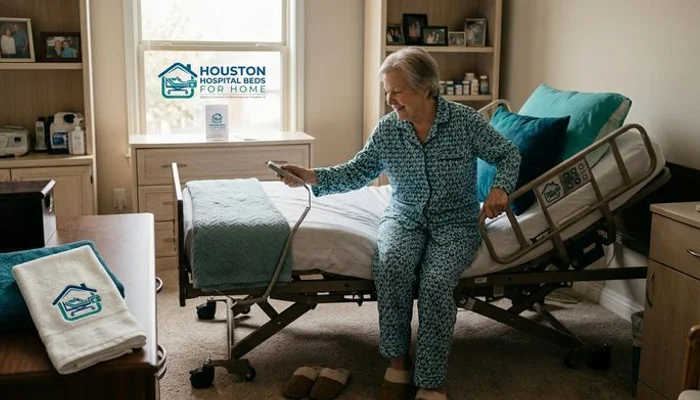
You can raise the head section to a full seated position before moving your legs.
This simple gravity assist reduces the physical strain by over 50%.
Using the side rail as a sturdy handhold allows for a safe transition to a walker or standing position.
Some full-electric models also feature “high-low” height adjustment.
You can lower the bed so the user’s feet land flat on the floor immediately.
This mechanical advantage significantly reduces fall risk during the morning routine.
2. Clinical-Grade Sleep Quality
Sleep architecture changes as we age, but chronic fatigue should not be accepted as normal.
Standard flat mattresses can exacerbate common geriatric conditions.
We advise clients to look for these specific position benefits:
- For Sleep Apnea: Elevating the torso by 10 to 15 degrees can keep airways open and reduce snoring intensity.
- For Circulation: Elevating the legs above heart level assists venous return, which is critical for seniors with edema or swelling in the ankles.
- For GERD: Sleeping on an incline uses gravity to keep stomach acid down, preventing painful nighttime reflux.
- Zero-Gravity Mode: This pre-set position raises the head and knees slightly to distribute weight evenly, relieving pressure on the lower spine.
Quality sleep improves cognitive function and immune response.
It is a health necessity for older adults.
3. Targeted Pain Management
Chronic pain affects a massive portion of the senior population.
Common issues include:
- Osteoarthritis in the hips or knees
- Spinal stenosis
- Degenerative disc disease
- Peripheral neuropathy
An adjustable bed functions as a pain management tool.
Precise positioning takes mechanical pressure off sensitive joints.
Raising the foot section relaxes the hamstring muscles, which in turn releases tension in the lower back.
Elevating the head relieves strain on the neck and shoulders.
Being able to micro-adjust these positions allows seniors to find a “sweet spot” that flat mattresses simply cannot offer.
4. Preventing Bedroom Falls
Falls are the leading cause of injury-related death for adults over 65 according to the CDC.
The majority of these accidents happen in the bedroom or bathroom.
Nighttime trips to the restroom are particularly hazardous due to grogginess and darkness.
Adjustable beds mitigate these risks through several features:
- Variable Height: Lowering the bed to its minimum height (often 10 to 12 inches) reduces the severity of injury if a roll-out fall occurs.
- Assist Rails: These provide a rigid anchor point for stability when sitting up or dressing.
- Electric Positioning: Eliminating the physical struggle to sit up prevents the dizziness (orthostatic hypotension) that often causes falls.
- Exit Alarms: Optional sensors can alert family members or caregivers the moment a patient attempts to leave the bed.
For a detailed breakdown of safety protocols, review our guide on fall prevention tips for elderly bedrooms.
5. Preserving Dignity and Independence
The psychological impact of this technology is often undervalued.
Dependence on others for basic movement can lead to feelings of helplessness.
An adjustable bed restores autonomy.
When a senior can:
- Sit up to watch TV without stacking pillows
- Adjust their sleeping angle without asking for help
- Transfer out of bed independently
They maintain agency over their daily life.
This independence is a critical component of mental health and resilience in aging populations.
Adjustable Bed vs Hospital Bed: What Do You Need?
We frequently help families decide between a clinical hospital bed and a consumer-style adjustable base.
The right choice depends on the level of medical care required.
Here is a functional comparison based on our inventory data:
| Feature | Adjustable Bed for Seniors | Hospital Bed |
|---|---|---|
| Primary Use | Comfort & Independence | Medical Care & Treatment |
| Aesthetic | Looks like furniture | Clinical appearance |
| Size Standards | Twin XL (38” x 80”), Queen | Hospital Standard (36” x 80” or 84”) |
| Height Adjustability | Rare (Head/Foot only) | Standard (High-Low feature) |
| Rail Compatibility | Limited options | Integrated safety rails |
| Mattress Type | Consumer hybrids/foam | Medical pressure-redistribution |
| Insurance | Private Pay | Medicare (strict criteria apply) |
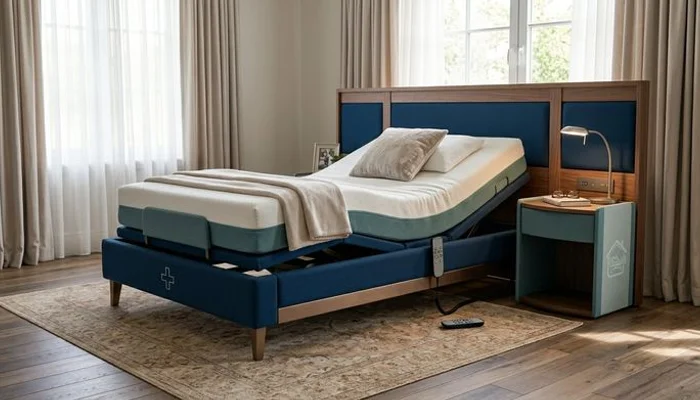
For seniors who are mobile but need support, an adjustable bed for seniors offers essential functionality without the “institutional” look.
For patients requiring caregiver assistance for bathing, wound care, or transfers, a full-electric hospital bed is the safer tool.
The ability to raise the entire bed to waist height protects the caregiver’s back during nursing tasks.
Strategies for a Smooth Transition
Seniors often resist medical equipment because it signals a loss of youth.
Reframing the conversation is key to acceptance.
We recommend the following approaches:
Focus on “Sleep System” Terminology. Avoid calling it a hospital bed. Describe it as a luxury upgrade for reading and watching TV. Many modern bases fit inside existing wooden bed frames, maintaining the room’s decor.
Involve Them in the Selection. Bring your parent to our showroom or look at options online together. Ownership of the decision dramatically increases usage compliance.
Be Proactive Rather Than Reactive. Introduce the bed when mobility is just starting to decline. Learning a new remote control is much easier when you are not recovering from surgery or a stroke.
Highlight the Immediate Benefits. Focus on better sleep, less back pain, and easier mornings. These are tangible improvements they will feel on the first night.
The Financial Reality of Delaying
The cost of proactive equipment is minimal compared to the cost of an accident.
We advise families to look at the numbers.
According to Genworth’s recent Cost of Care data:
- Assisted Living: Costs average between $4,500 and $6,000 per month depending on the region.
- Hip Fracture: Medical costs often exceed $40,000, not including rehabilitation.
- Home Care: 24/7 in-home assistance can run upwards of $15,000 monthly.
In contrast, renting a hospital bed for home use ranges from $175 to $275 per month.
Purchasing a high-quality adjustable base is a one-time expense often under $2,000.
This investment serves as an insurance policy for continued independence.
We Serve Houston Seniors and Families
At Houston Hospital Beds For Home, we specialize in bridging the gap between hospital and home.
Our team helps families across the Greater Houston area identify the exact equipment needed to keep their loved ones safe.
Whether you need a temporary rental or a permanent luxury solution, we have the expertise to guide you.
Request a free quote or call us directly at (713) 555-0123.
We provide same-day delivery and setup and ensure every family member is fully trained on the bed’s operation before we leave.
Need a Hospital Bed in Houston?
Get a free, no-obligation quote with transparent pricing and same-day delivery options.